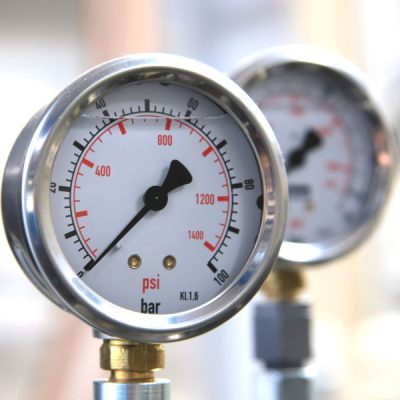
A 4-inch liquid filled pressure gauge is easier to read at a distance and is a solid choice for industrial systems where vibration and pulsation can cause needle bounce. The liquid fill helps stabilize the pointer, making readings clearer in compressors, pumps, hydraulics, and other demanding setups.
4” liquid filled gauges are commonly used for:
Air compressors and pneumatic lines
Pumps and water pressure systems
Hydraulic equipment
HVAC and industrial service work
General industrial applications with vibration or pulsation
Why Choose a 4” Dial
Easier to read
The larger dial gives better visibility when the gauge is mounted on equipment, skids, or panels.
Better for quick checks
If operators need to read pressure fast without getting close, a 4” dial helps reduce mistakes.
Works well with vibration protection
When combined with liquid fill, the 4” format is a reliable setup for rough operating conditions.
Liquid Fill: What it does
Liquid fill (commonly glycerin, sometimes silicone) helps:
Reduce needle flutter from pulsation
Protect internal movement from constant vibration
Improve readability in “shaking” environments
If your needle bounces or pressure fluctuates quickly, liquid fill is usually the better choice.
Choose Your Connection Type
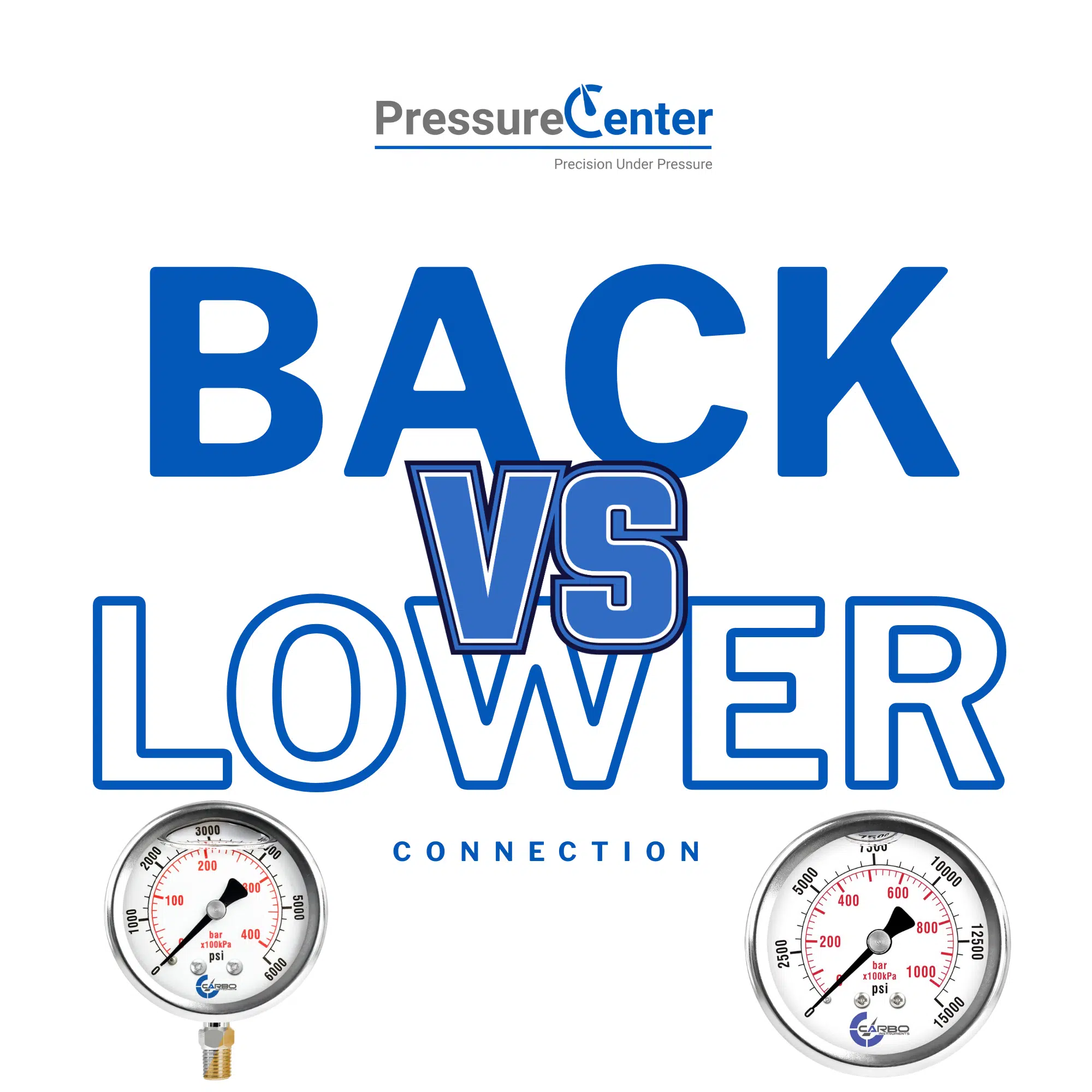
Lower (Bottom) Connection
Best for installations where the fitting is below the gauge. This is common on regulators, compressors, and piping where the gauge threads directly into a bottom port.
Back Connection
Best for panel mounting or installations where the fitting is behind the gauge for a cleaner front view.
Quick rule: Pipe/regulator = Lower. Panel = Back.
How to Choose the Right Range
Pick a gauge range where your normal operating pressure sits around the middle of the dial. Avoid running near the max all the time—this can shorten gauge life and reduce useful readability.
Example: If your system runs near 100 psi, a 0–160 psi or 0–200 psi range often gives a better reading than a tight 0–100 psi range.
Explore Pressure Gauge Solutions
After reviewing the educational resources, you can explore available liquid filled pressure gauge options suited for industrial and commercial use.
Thread size: usually 1/4” NPT or 1/2” NPT (match your port)
Connection position: lower vs back
Case/material: stainless steel case is common for durability
Scale: single or dual scale (psi/bar) depending on your preference
Common Specs to Confirm Before Ordering (H2)
How to Read Our SKU (H2)
Our SKUs are designed to help you identify the gauge family and configuration faster.
Example series seen on our liquid-filled 4” line: L40-SSL
In general, confirm these items when reading a SKU/product option:
Series / model family (example: L40)
Case type/material (example: SSL often indicates stainless steel case)
Mount/connection style (lower or back—shown in the product title/specs)
Pressure range (shown in the selected option/spec table)
If you’re not sure which SKU fits your system, send us:
your normal operating pressure
your thread size (1/4” or 1/2” NPT)
lower vs back connection preference and we’ll help you match the correct model.
Related Datasheets
Frequently Asked Questions
Will a liquid filled gauge stop needle bounce?
In many cases, yes. Liquid fill helps a lot with vibration and pulsation. For severe pulsation, you may also need a snubber or dampener.
Is 4” better than 2.5”?
If you need easier visibility or read from a distance, yes. If space is tight, 2.5” may be better.
Can I use these outdoors?
Yes, but large temperature swings can affect fill behavior. For harsher outdoor environments, choose a gauge designed for those conditions and confirm the fill type if needed.
Should I choose lower or back connection?
Lower is most common for direct pipe/regulator installs. Back is best for panels or when you want the line behind the gauge.
Want to request a Calibration Quote?
We also offer Pressure Gauge Calibration services. Serving customers nationwide with fast turnaround for oil, gas, and industrial manufacturing. We provide NIST-traceable pressure gauge calibration with detailed certificates, test data, and full traceability documentation