Liquid filled pressure gauges are widely used in industrial and mechanical systems where accurate pressure readings are required under harsh operating conditions. These gauges are designed to perform reliably in environments with vibration, pulsation, and exposure to the elements.
This guide explains what liquid filled pressure gauges are, how they work, their advantages, and how to choose the right one for your application.
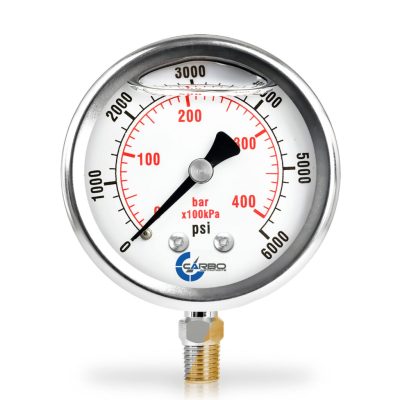
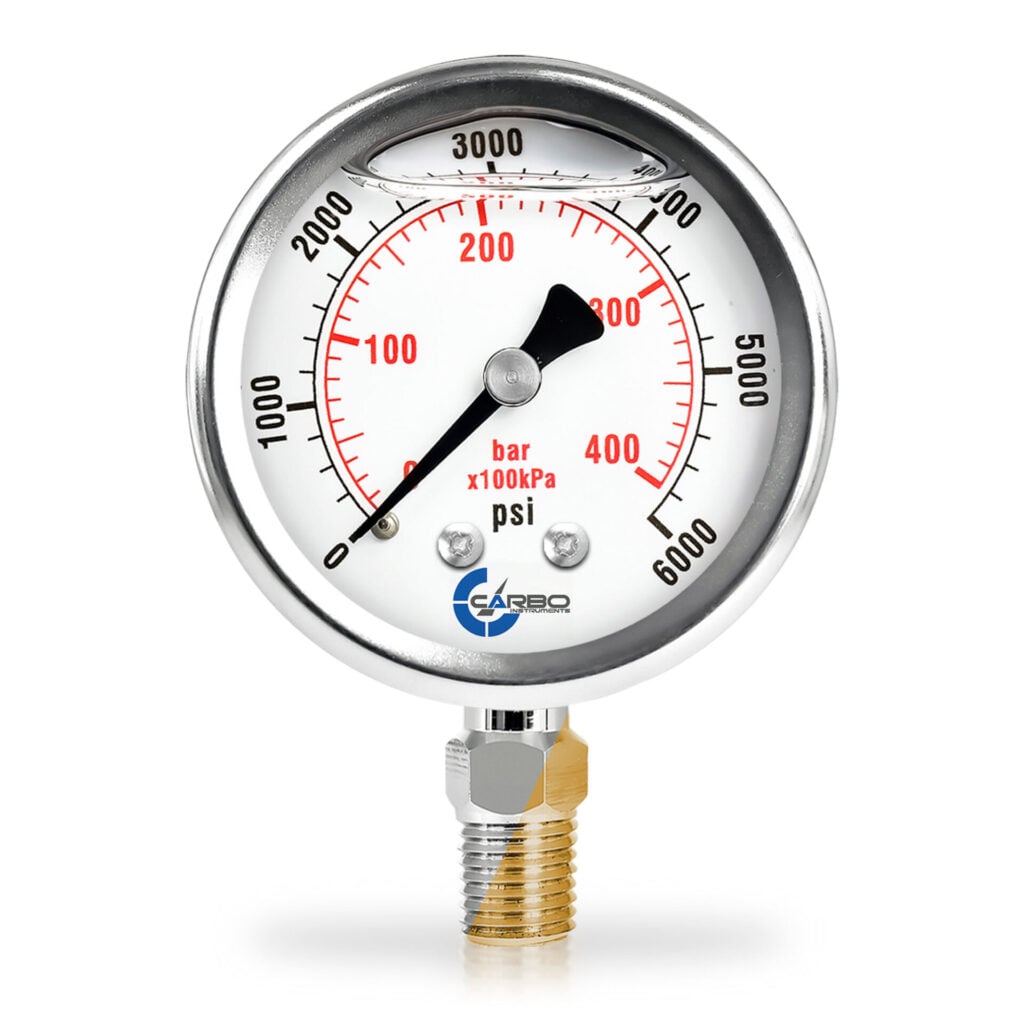
Liquid filled pressure gauges are pressure measurement instruments that contain a damping liquid inside the case. The most common filling liquids are glycerin and silicone oil. This liquid surrounds the internal components of the gauge and helps stabilize the needle movement.
Compared to dry pressure gauges, liquid filled pressure gauges are better suited for systems where pressure fluctuates rapidly or where vibration is present. They are commonly used in industrial, hydraulic, and outdoor applications.
How Liquid Filled Pressure Gauges Work
Liquid filled pressure gauges typically use a Bourdon tube mechanism. When pressure enters the gauge, the Bourdon tube flexes and moves the needle to indicate the pressure level on the dial.
The liquid inside the gauge case acts as a dampener. It absorbs vibration and pressure spikes, preventing the needle from shaking or bouncing. This results in smoother readings and improved accuracy over time.
Best Applications
Air compressors and pneumatic systems
Pumps and water pressure systems
Hydraulic equipment
HVAC and refrigeration service
Industrial machinery with vibration
Benefits of Liquid Filled Pressure Gauges
Liquid filled pressure gauges offer several advantages over dry gauges, especially in demanding environments.
Improved Reading Stability
The internal liquid reduces needle flutter, making readings easier to interpret even when pressure fluctuates.
Increased Durability
The liquid protects internal components from wear caused by vibration and mechanical shock.
Better Performance in Harsh Conditions
Liquid filled gauges perform well in outdoor installations, high-vibration systems, and applications exposed to moisture or dust.
Extended Service Life
By reducing internal stress and corrosion, liquid filled pressure gauges often last longer than dry gauges in similar conditions.
The main difference between liquid filled and dry pressure gauges is their ability to handle vibration and pressure pulsation.
Liquid filled pressure gauges are ideal for applications with constant movement, while dry pressure gauges are suitable for stable, low-vibration environments. Choosing the correct type helps prevent inaccurate readings and premature gauge failure.
Why Choose a Liquid Filled Gauge?
Stable, Smooth Readings
The liquid fill reduces needle bounce caused by vibration or pulsation.
Increased Durability
Internal components are protected from shock, extending service life in demanding environments.
Better Visibility
Steady needle movement makes pressure readings easier to monitor at a glance.
Common Applications of Liquid Filled Pressure Gauges
Liquid filled pressure gauges are used across many industries and systems, including:
Hydraulic systems
Air compressors
Pumps and motors
HVAC equipment
Manufacturing machinery
Oil and gas operations
Outdoor and mobile equipment
These gauges are especially useful where vibration or pressure spikes are common.
Common Issues and Maintenance Tips
Although liquid filled pressure gauges are durable, some issues may occur over time.
Fogging: Can happen due to temperature changes or moisture ingress.
Case Bulging: Often caused by thermal expansion in non-vented gauges.
Needle Sticking: May indicate contamination or internal wear.
Regular inspection and selecting the correct gauge for the environment help prevent these problems.
For applications that require precise measurements, regular calibration is essential to ensure pressure gauge accuracy and compliance with industry standards. Professional calibration and certification services help verify performance, detect measurement drift, and maintain reliable system operation. For certified calibration services, you can refer to pressure gauge calibration and certification services from Carbo Instruments, which support industrial and quality-controlled environments.
Liquid Filled Pressure Gauges Datasheets
How to Choose the Right Liquid Filled Pressure Gauge
When selecting a liquid filled pressure gauge, consider the following factors:
Pressure Range
Choose a gauge where normal operating pressure falls within the middle range of the scale for best accuracy.
2. Dial Size
Larger dials are easier to read from a distance, while smaller dials are suitable for compact installations.
3. Connection Type and Size
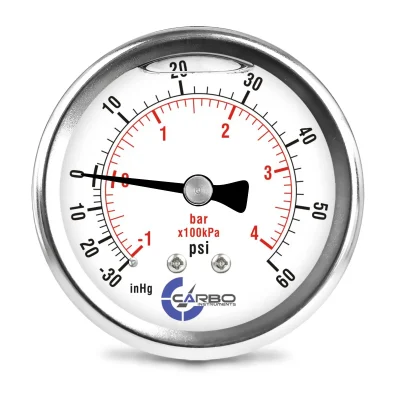
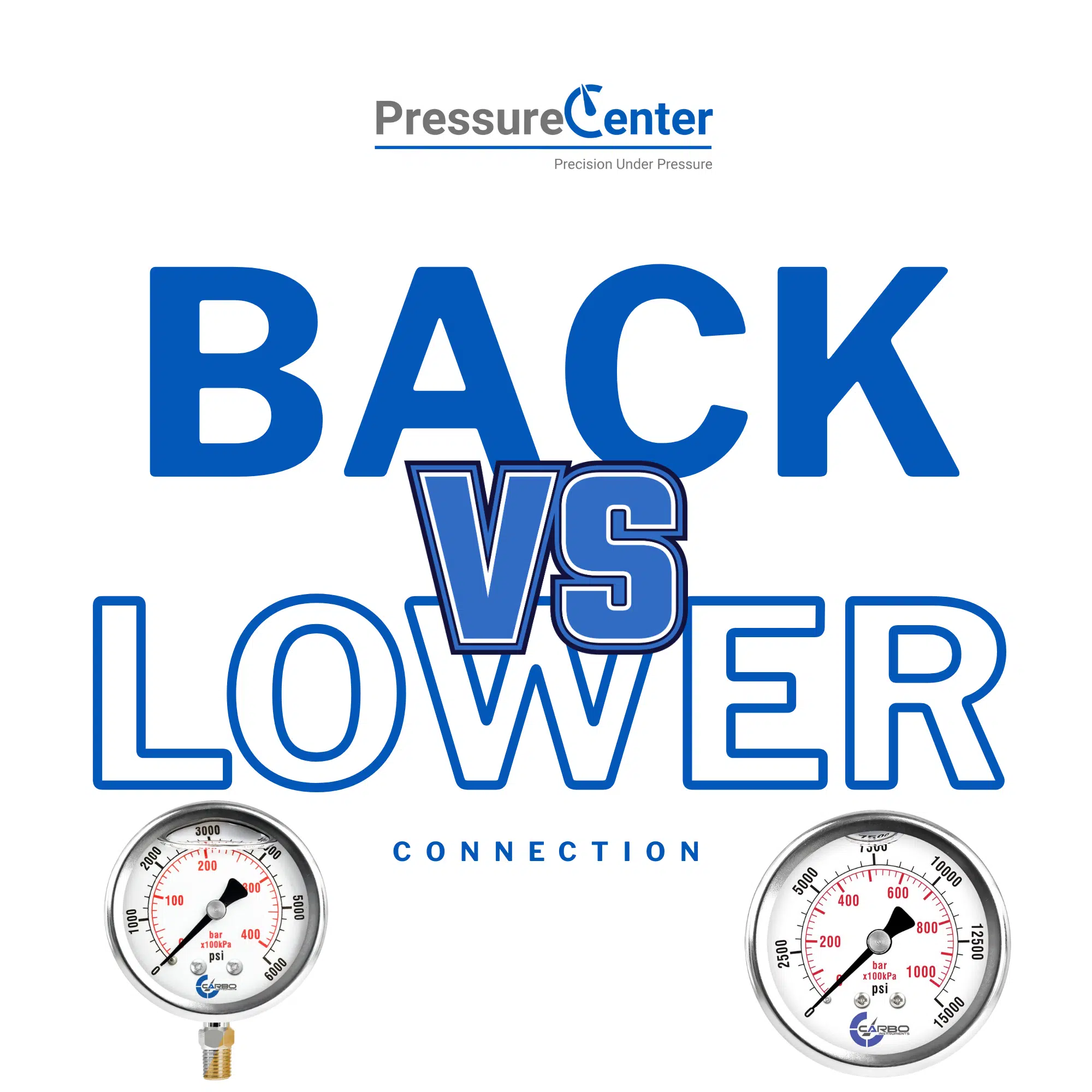
Common connections include bottom mount and back mount with standard thread sizes such as 1/4″ or 1/2″ NPT.
4. Filling Liquid
Glycerin is commonly used for general applications, while silicone oil is better for extreme temperatures or specific chemical environments.
5. Application Environment
Consider vibration level, temperature, and exposure to moisture when selecting a gauge.
When selecting a liquid filled pressure gauge, consider the following factors:
Pressure Range
Choose a gauge where normal operating pressure falls within the middle range of the scale for best accuracy.
2. Dial Size
Larger dials are easier to read from a distance, while smaller dials are suitable for compact installations.
3. Connection Type and Size
Common connections include bottom mount and back mount with standard thread sizes such as 1/4″ or 1/2″ NPT.
4. Filling Liquid
Glycerin is commonly used for general applications, while silicone oil is better for extreme temperatures or specific chemical environments.
5. Application Environment
Consider vibration level, temperature, and exposure to moisture when selecting a gauge.
Are Liquid Filled Pressure Gauges Right for Your System?
Liquid filled pressure gauges are an excellent choice for systems that demand stable readings and long-term reliability. They are especially useful in environments where vibration, pulsation, or outdoor exposure would affect standard dry gauges.
Selecting the correct pressure gauge improves system safety, accuracy, and overall performance.
Frequently Asked Questions
Do liquid filled pressure gauges stop needle bounce?
Yes. Liquid fill significantly reduces needle vibration. For extreme pulsation, a snubber may also be recommended.
Can liquid filled gauges be used outdoors?
Yes, but temperature changes can affect internal pressure. Proper gauge selection is important.
When should I choose back connection instead of lower connection?
Choose back connection when mounting the gauge on a panel or when the piping is located behind the gauge.
Do liquid filled gauges require maintenance?
Minimal maintenance is required. Periodically check for zero return and physical damage.
Ready to Order or Need Pricing?
Browse our selection of Liquid Filled Pressure Gauges and choose the configuration that fits your application. If you need bulk pricing, special specifications, or assistance selecting the right gauge, our team is here to help.