
Back vs Lower Connection Pressure Gauge: Choosing the Right Mount for Your System
When selecting a pressure gauge, one of the most important decisions you’ll make is which type of connection to use. Back connection and lower connection pressure gauges are the two most common configurations. Understanding the differences between these options can help you make the right choice based on your installation type, space requirements, and aesthetic preferences.
In this guide, we’ll explain the difference between back vs lower connection pressure gauges, the best uses for each, and how to choose the right one for your system.
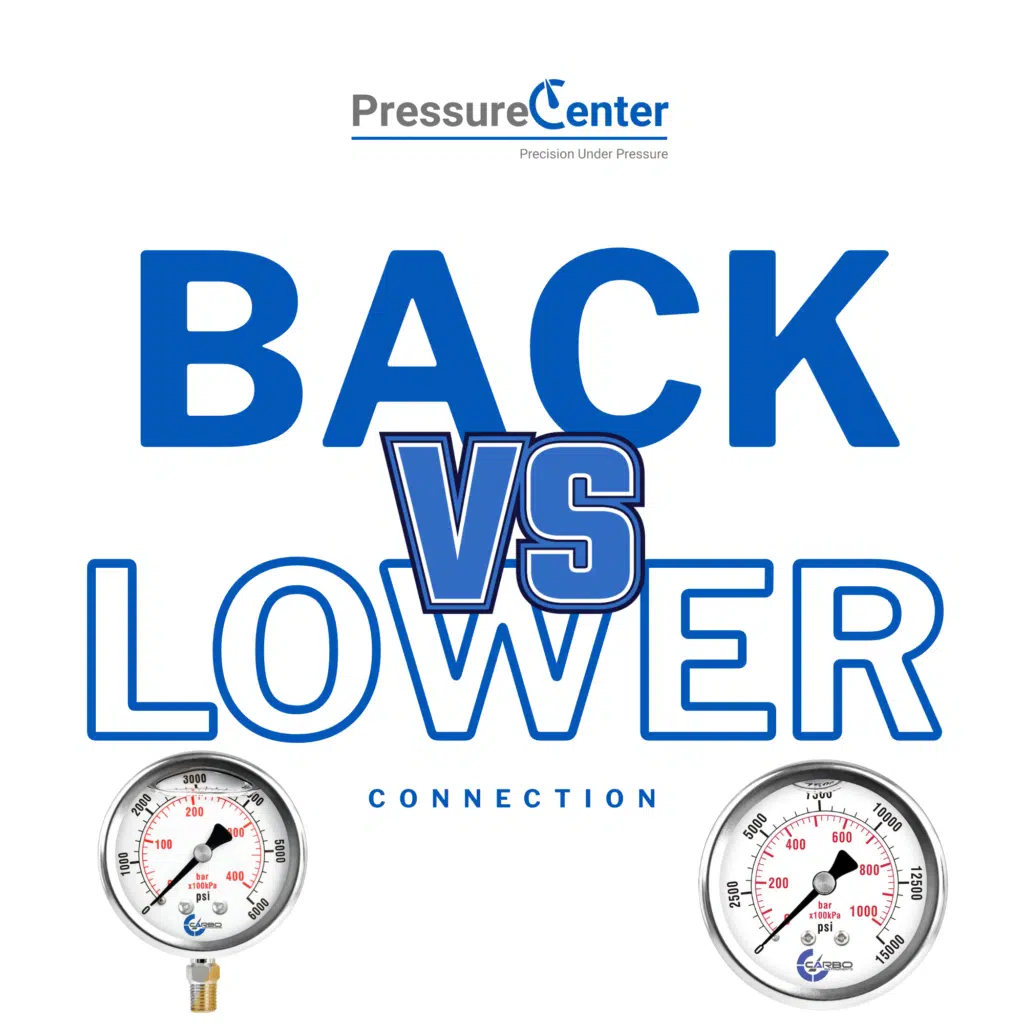
Back vs Lower Connection Pressure Gauge: Choosing the Right Mount for Your System
When selecting a pressure gauge, one of the most important decisions you’ll make is which type of connection to use. Back connection and lower connection pressure gauges are the two most common configurations. Understanding the differences between these options can help you make the right choice based on your installation type, space requirements, and aesthetic preferences.
In this guide, we’ll explain the difference between back vs lower connection pressure gauges, the best uses for each, and how to choose the right one for your system.
What is a Back Connection Pressure Gauge?
A back connection pressure gauge, also known as center back connection, has its threaded port located at the back of the gauge. This connection type is ideal for panel mounting or flush installations where the connection needs to be hidden behind the gauge for a cleaner look.
Advantages of Back Connection Pressure Gauges:
-
Clean and neat appearance: The back connection allows the gauge to sit flush against a panel or wall, providing a sleek and professional look.
-
Space-saving: The port is hidden at the rear, saving space and allowing for more efficient installations in tight spaces.
-
Common in control panels: Used extensively in control panels, dashboards, and instrumentation systems where gauges are arranged in rows for easy viewing.
Best for:
-
Control panels
-
Instrumentation systems
-
Specialty equipment installations
What is a Lower Connection Pressure Gauge?
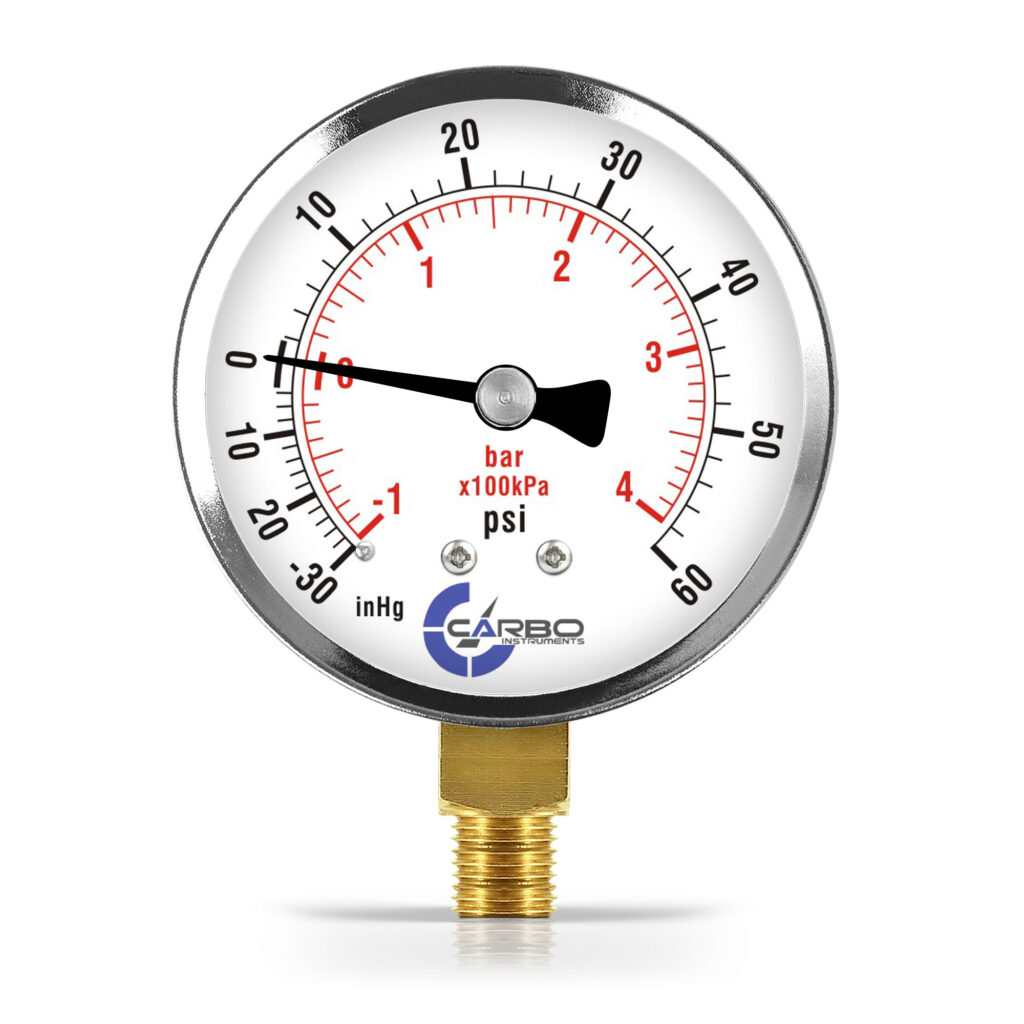
A lower connection pressure gauge has its threaded port located at the bottom of the gauge. This type of gauge is ideal for installations where the gauge will be mounted directly onto a pipe, regulator, or compressor. It’s the most common choice for general industrial use.
Advantages of Lower Connection Pressure Gauges:
-
Most common for industrial systems: Lower connection is the industry standard for pipe or regulator installations.
-
Easy installation: The threaded port is placed at the bottom, making it easy to connect directly to piping systems, compressors, or regulators.
-
Versatile: This configuration works across a wide range of applications, from industrial settings to residential HVAC systems.
Best for:
-
Piping systems
-
Compressors
-
Regulators
-
General industrial applications
Back vs Lower Connection: Which One Should You Choose?
When to Choose a Back Connection Gauge:
-
Panel installation: If you’re mounting the gauge on a control panel or dashboard, a back connection is ideal. It keeps the connection out of sight and provides a cleaner aesthetic.
-
Limited space: The back connection is perfect for installations in tight spaces where you need the gauge to sit flush against a surface without visible connections.
-
Aesthetic considerations: If you want to maintain a sleek, professional look with hidden connections, back connections are the way to go.
When to Choose a Lower Connection Gauge:
-
Piping or regulator setup: The lower connection is the go-to choice for mounting pressure gauges on pipes, regulators, or compressors. It provides a secure connection directly to the system.
-
General industrial use: Lower connection gauges are highly versatile and are used in a variety of industries, from HVAC to hydraulics.
-
Ease of installation: If your installation involves a direct connection to a fitting, lower connection gauges are easier to mount and fit most systems.
How to Choose Between Back vs Lower Connection Pressure Gauges
When deciding which connection type to use, consider the following:
-
For panel installations: Choose a back connection if the gauge needs to be mounted flat against a panel or wall.
-
For piping or regulator installs: Go with lower connection for easy installation directly on pipes, regulators, or compressors.
-
For space constraints: If space is limited and you want a cleaner look, the back connection is often the better option.
-
For universal use: If you need a pressure gauge that can work in most industrial settings, the lower connection is a versatile and reliable choice.
Contact PressureCenter
Choosing between a back vs lower connection pressure gauge pressure gauge depends on your installation needs. Back connection gauges are perfect for panel mounting and clean setups, while lower connection gauges are ideal for direct installations on pipes, regulators, and compressors.
If you’re unsure about the right connection type for your system, contact us for expert advice on selecting the best pressure gauge for your application.
Frequently Asked Questions
Can I use a back connection gauge on a pipe or regulator?
Typically, no. Lower connection is the standard for piping systems, where the gauge is directly threaded into the pipe or regulator.
What’s the benefit of using a back connection gauge in a panel?
The main benefit of a back connection is that it hides the connection at the back, making it perfect for panel installations where you want a clean and professional look.
How do I know which connection I need?
-
Panel installation: Go for back connection.
-
Pipe installation: Opt for lower connection.
-
Limited space or aesthetic preference: Choose back connection.
View PressureCenter's online selection
of Pressure Gauges
- 1541 Prudential Drive
Dallas, TX 75235 - Tel: 972.803.4040