
How to Choose a Liquid Filled Pressure Gauge
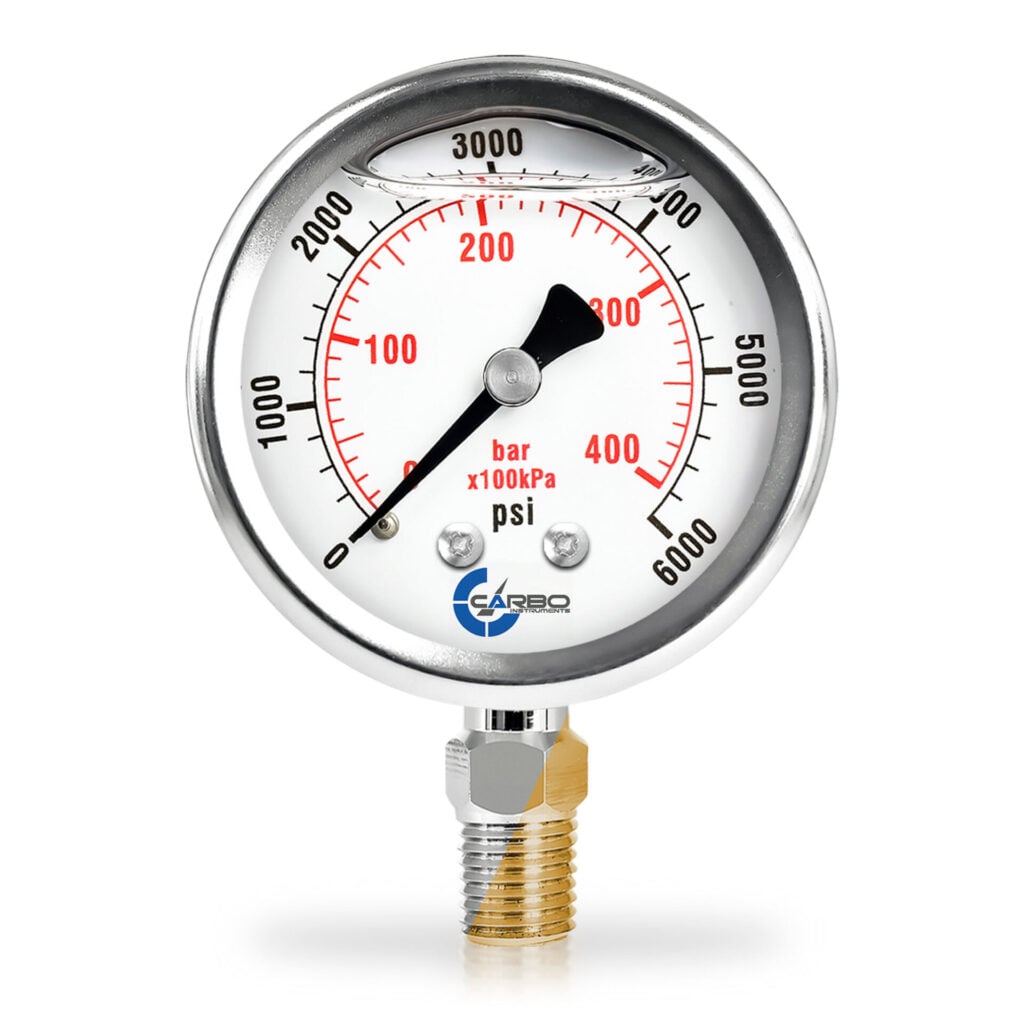
Choosing the right liquid filled pressure gauge is critical for accurate pressure measurement and long-term system reliability. While liquid filled gauges are designed to handle vibration and pressure fluctuations, selecting the wrong configuration can still lead to inaccurate readings, premature wear, or gauge failure.
This guide walks through every key factor you should consider when choosing a liquid filled pressure gauge, from pressure range and dial size to filling liquid, accuracy, and operating environment.

How to Choose a Liquid Filled Pressure Gauge
Choosing the right liquid filled pressure gauge is critical for accurate pressure measurement and long-term system reliability. While liquid filled gauges are designed to handle vibration and pressure fluctuations, selecting the wrong configuration can still lead to inaccurate readings, premature wear, or gauge failure.
This guide walks through every key factor you should consider when choosing a liquid filled pressure gauge, from pressure range and dial size to filling liquid, accuracy, and operating environment.
Why Liquid Filled Pressure Gauges Are Used
Liquid filled pressure gauges are commonly used in systems where dry gauges struggle to deliver stable readings. The liquid inside the gauge case dampens vibration, reduces needle flutter, and protects internal components from wear.
These gauges are often chosen for:
High-vibration environments
Systems with pressure pulsation
Outdoor installations
Industrial and mechanical equipment
Understanding why liquid filled gauges are used helps you decide whether they are the right solution for your application.
Step 1: Identify the Correct Pressure Range
Selecting the correct pressure range is one of the most important decisions.
For best performance, the normal operating pressure should fall between 25% and 75% of the gauge’s full-scale range. This prevents constant stress on the internal mechanism and ensures accurate readings.
Tips for pressure range selection:
Avoid choosing a gauge where operating pressure is near the maximum scale
Do not oversize the range, as this reduces readability and accuracy
Consider pressure spikes or surges when selecting the maximum range
Choosing the correct range improves both accuracy and gauge lifespan.
Step 2: Choose the Right Dial Size
Dial size affects how easily pressure readings can be read and interpreted.
Smaller dial sizes are suitable for compact installations or close-range viewing
Larger dial sizes are ideal for installations where readings must be seen from a distance
When choosing a dial size, consider viewing distance, lighting conditions, and available mounting space.
Step 3: Select the Proper Connection Type and Mounting Style
Liquid filled pressure gauges are available with different mounting and connection options. Selecting the correct one ensures proper installation and prevents leaks.
Common mounting options include:
Bottom mount
Back mount
Common connection sizes:
1/4″ NPT
1/2″ NPT
Always confirm thread size, orientation, and mounting position before selecting a gauge.
Step 4: Choose Between Glycerin and Silicone Filling
The type of liquid inside the gauge plays a major role in performance.
Glycerin-Filled Pressure Gauges
Commonly used for general industrial applications
Suitable for moderate temperature ranges
Cost-effective and widely available
Silicone-Filled Pressure Gauges
Better suited for extreme temperatures
Perform well in environments with wide temperature fluctuations
Often used in outdoor or specialized applications
Choosing the correct filling liquid helps prevent internal damage and maintains stable readings.
Step 5: Consider the Operating Environment
Environmental conditions directly affect gauge performance and durability.
Evaluate:
Level of vibration or mechanical shock
Exposure to moisture, dust, or corrosive substances
Indoor versus outdoor installation
Ambient temperature range
Liquid filled pressure gauges perform well in harsh environments, but selecting the right materials and fill liquid is essential for long-term reliability.
Step 6: Understand Accuracy Requirements
Accuracy requirements vary depending on the application.
General industrial systems typically require standard accuracy
Precision applications may require tighter accuracy tolerances
Selecting a gauge with the appropriate accuracy rating ensures reliable measurements without unnecessary cost.
Step 7: Check Gauge Compatibility with Process Media
The media being measured can affect gauge selection.
Before choosing a liquid filled pressure gauge, confirm:
Media compatibility with gauge materials
Whether the media is corrosive or abrasive
Any industry-specific requirements
Matching gauge materials to the process media helps prevent corrosion and internal damage.
Step 8: Think About Long-Term Maintenance and Service Life
Liquid filled pressure gauges generally offer longer service life than dry gauges in demanding environments. However, proper selection still matters.
Consider:
Ease of replacement
Availability of calibration services
Expected maintenance intervals
A properly selected gauge reduces downtime and replacement costs.
Common Mistakes to Avoid When Choosing a Liquid Filled Pressure Gauge
Avoid these common selection errors:
Choosing a pressure range that is too close to operating pressure
Ignoring temperature extremes
Using the wrong filling liquid for the environment
Selecting the wrong mounting orientation
Overlooking accuracy requirements
Avoiding these mistakes improves performance and extends gauge life.
When a Liquid Filled Pressure Gauge Is the Best Choice
Liquid filled pressure gauges are recommended for systems with vibration, pulsation, or mechanical shock. They are widely used in hydraulic systems, air compressors, HVAC equipment, pumps, and industrial machinery.
If your application experiences unstable pressure readings or harsh operating conditions, a liquid filled gauge is often the best solution.
Learn More About Liquid Filled Pressure Gauges
For a complete explanation of how liquid filled pressure gauges work, their benefits, and common applications, visit our Liquid Filled Pressure Gauge Resources.
Don't Know How to Choose a Liquid Filled Pressure Gauge? Contact PressureCenter
PressureCenter is a trusted source for pressure measurement instruments worldwide. We help customers choose reliable pressure gauges and accessories for industrial, commercial, and mechanical applications. Our goal is simple: provide accurate, durable solutions that support safe operation, reduce downtime, and improve consistency in everyday use. Whether you need guidance on selecting the right gauge for vibration-prone systems, choosing the correct pressure range and connection type, or understanding the difference between liquid filled and dry gauges, our team is here to help. Explore our products and resources to find the best fit for your system and keep your operations running safely and efficiently.
View PressureCenter's online selection
of Liquid Filled and Dry Pressure Gauges
Frequently Asked Questions
Frequently Asked Questions About Liquid Filled Pressure Gauges
Liquid filled pressure gauges are not inherently more accurate than dry gauges, but they provide more stable readings in environments with vibration or pressure pulsation. The liquid dampens needle movement, making readings easier to interpret and reducing wear on internal components.
Why does my liquid filled pressure gauge fog up?
Fogging usually occurs due to temperature changes or moisture entering the gauge case. It is common in outdoor installations or environments with high humidity. Minor fogging does not always affect accuracy, but excessive condensation can obstruct visibility and may indicate sealing issues.
Can liquid filled pressure gauges be used outdoors?
Yes, liquid filled pressure gauges are commonly used outdoors because the liquid helps protect internal components from vibration and environmental stress. For outdoor use, it is important to choose gauges designed for temperature fluctuations and to ensure proper venting when required.
What liquid is inside a liquid filled pressure gauge?
Most liquid filled pressure gauges use glycerin as the filling liquid. Silicone oil is also used in applications with extreme temperatures or wide temperature swings. The liquid helps dampen vibration and stabilize the needle.
How often should liquid filled pressure gauges be calibrated?
Calibration frequency depends on the application and accuracy requirements. For critical systems, periodic calibration is recommended to ensure reliable readings. Gauges exposed to pressure spikes, vibration, or harsh conditions may require more frequent inspection or replacement.
- 1541 Prudential Drive
Dallas, TX 75235 - Tel: 972.803.4040