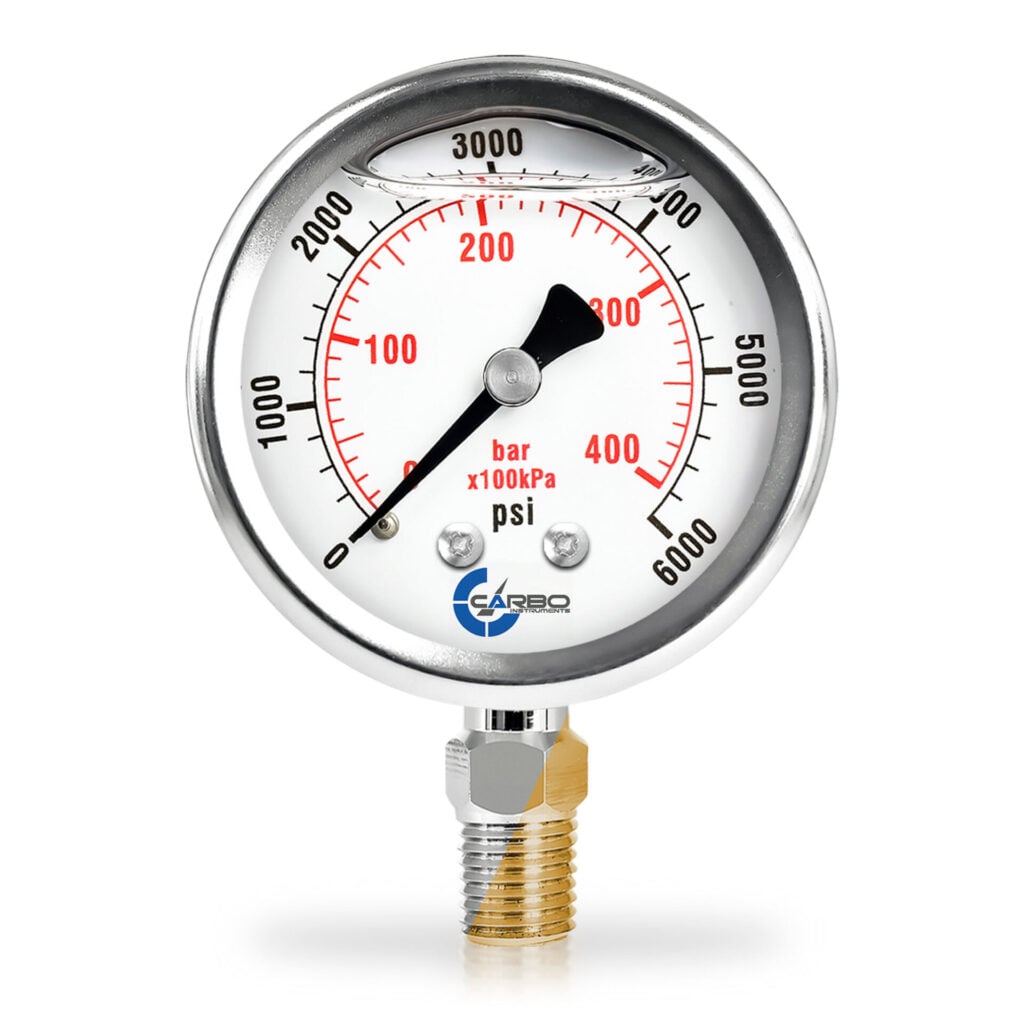
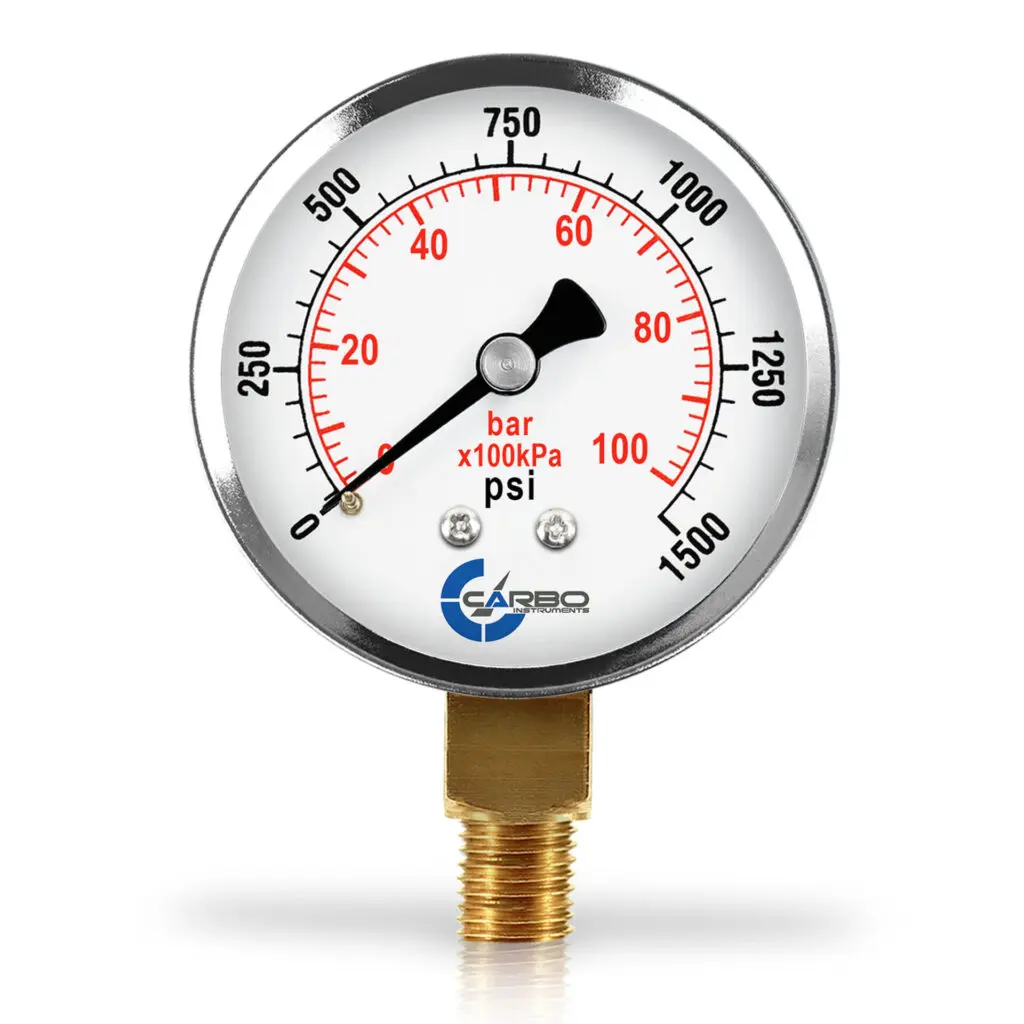
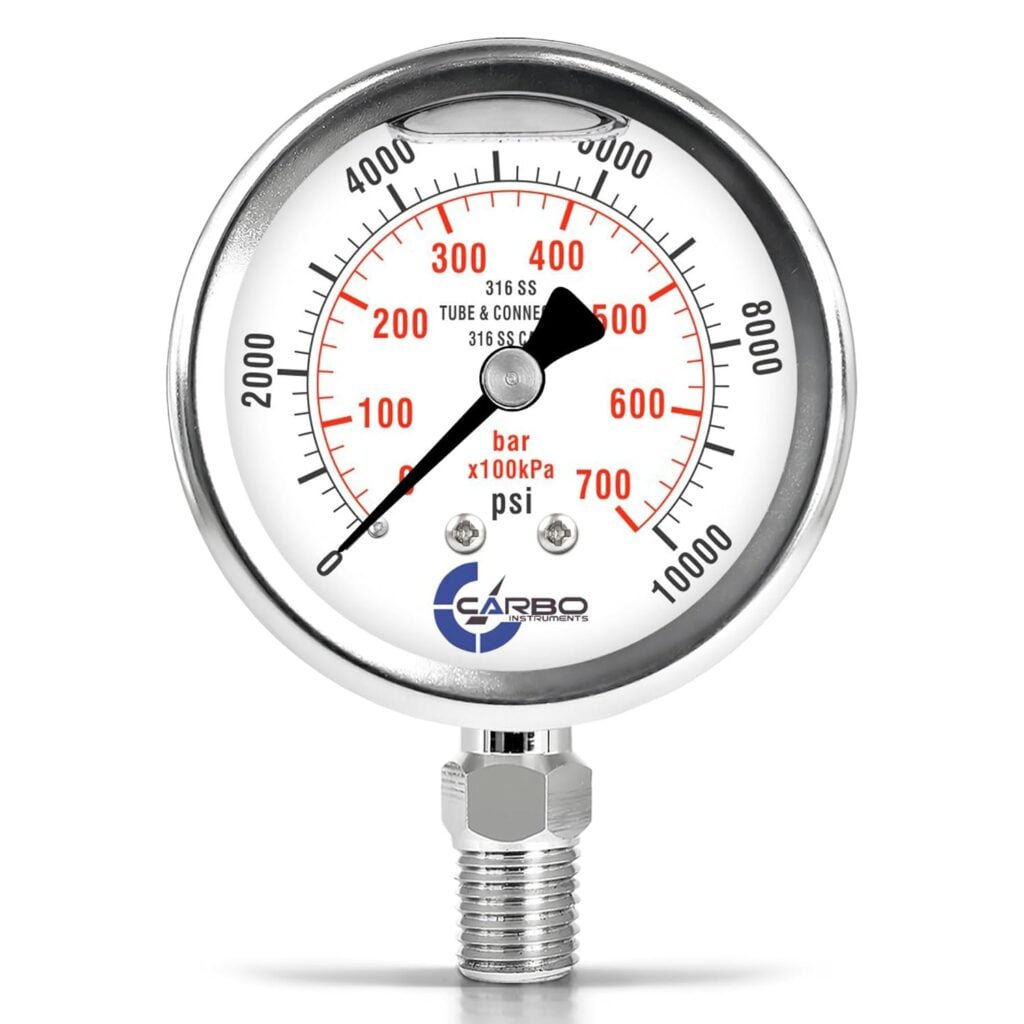
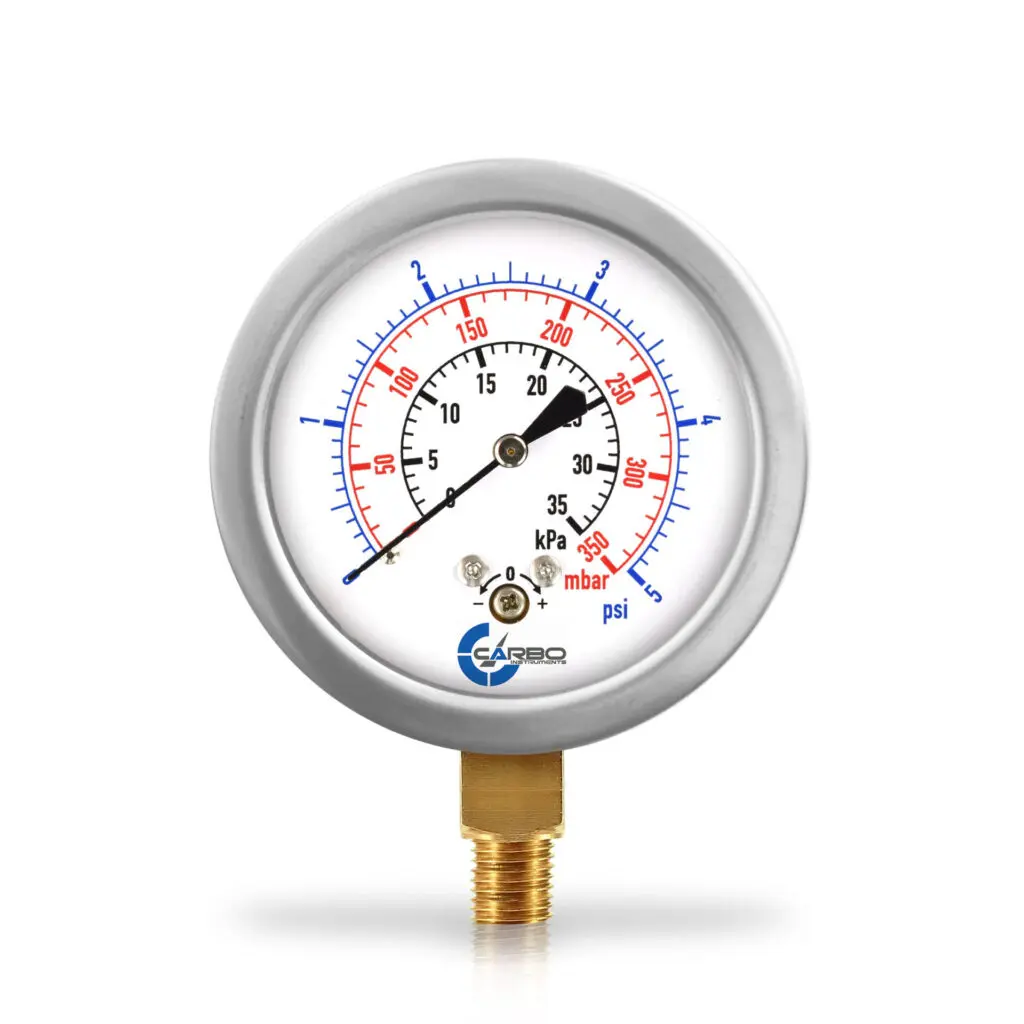
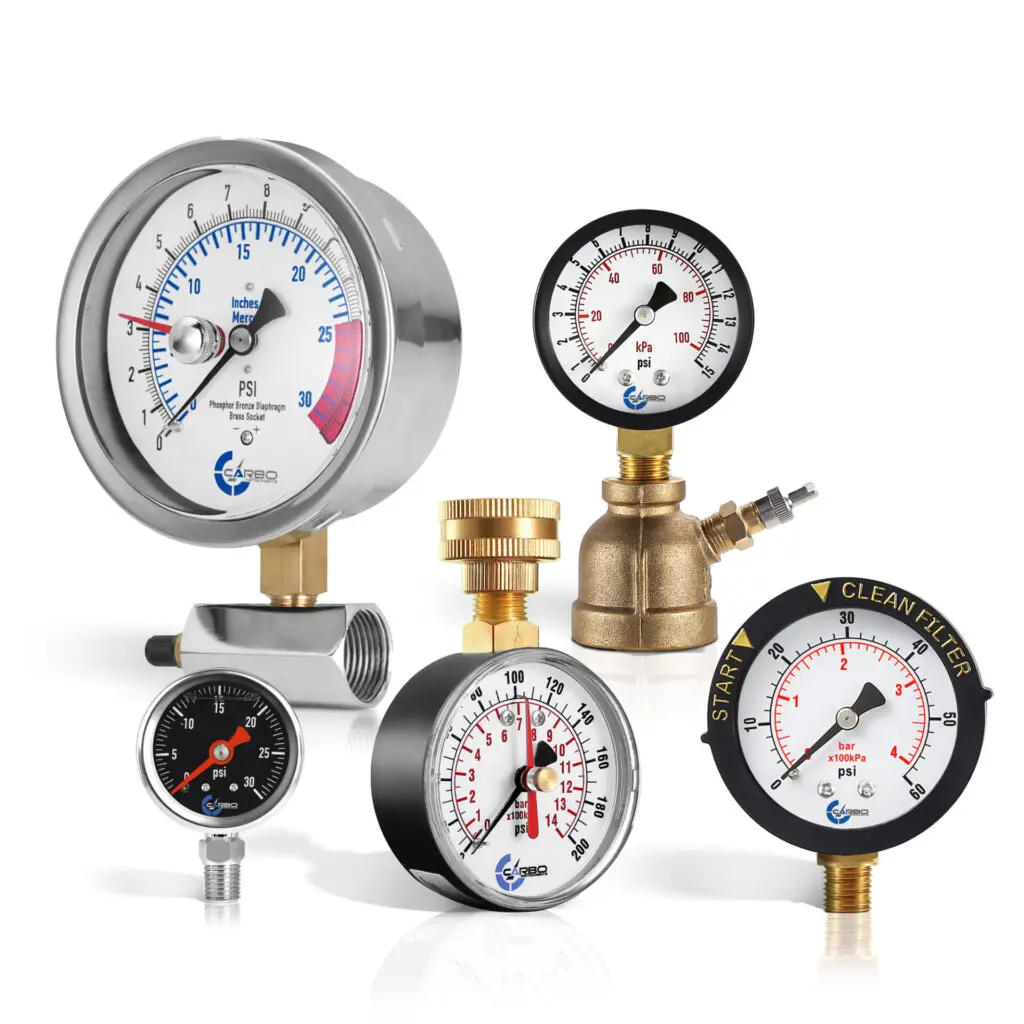
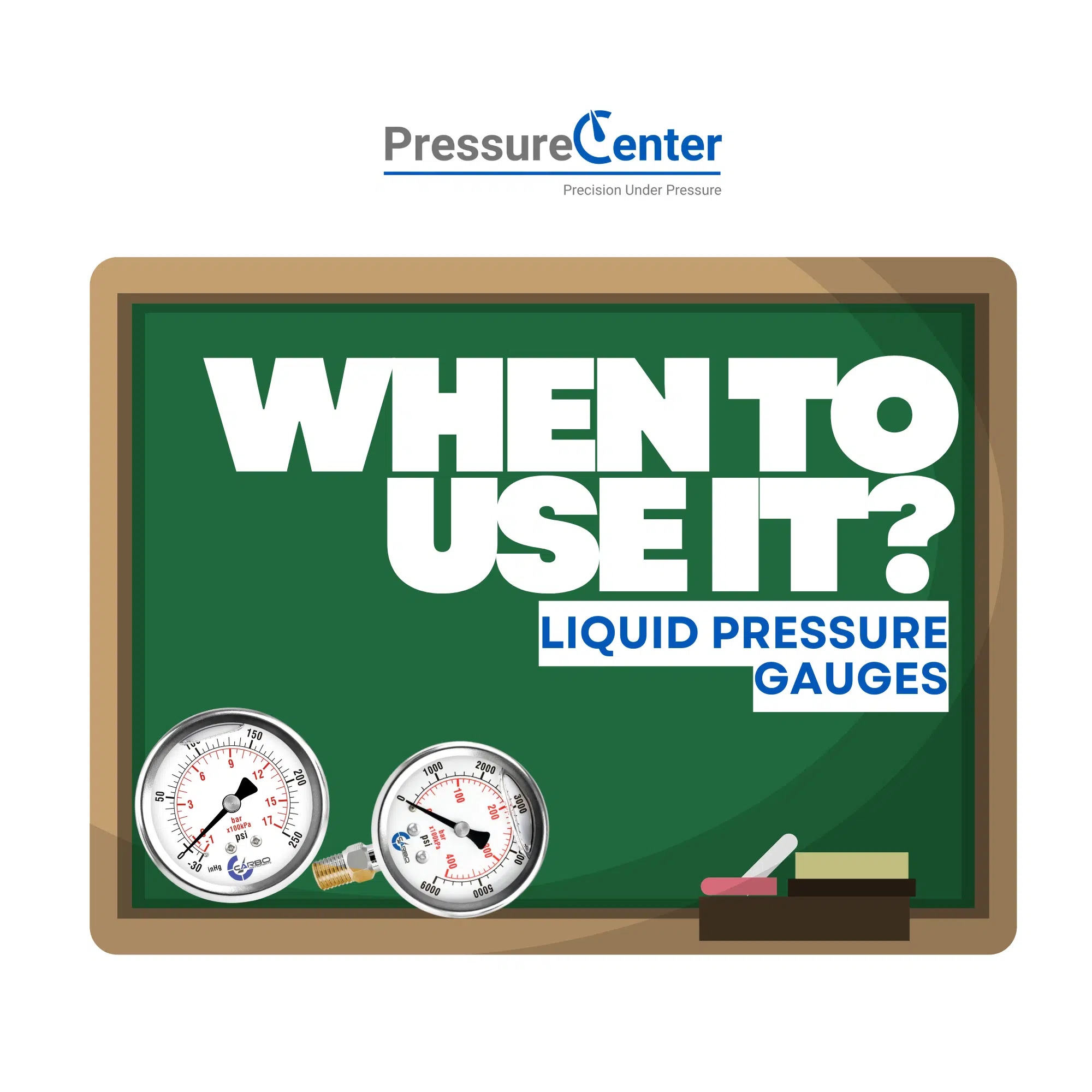
PressureCenter supplies industrial pressure gauges for air, water, oil, hydraulics, and general process applications. Browse by category to find the right gauge faster. For systems with vibration or pulsation, liquid filled pressure gauges help reduce needle bounce and improve readability. For stable systems and basic monitoring, dry pressure gauges are a simple and cost-effective option.
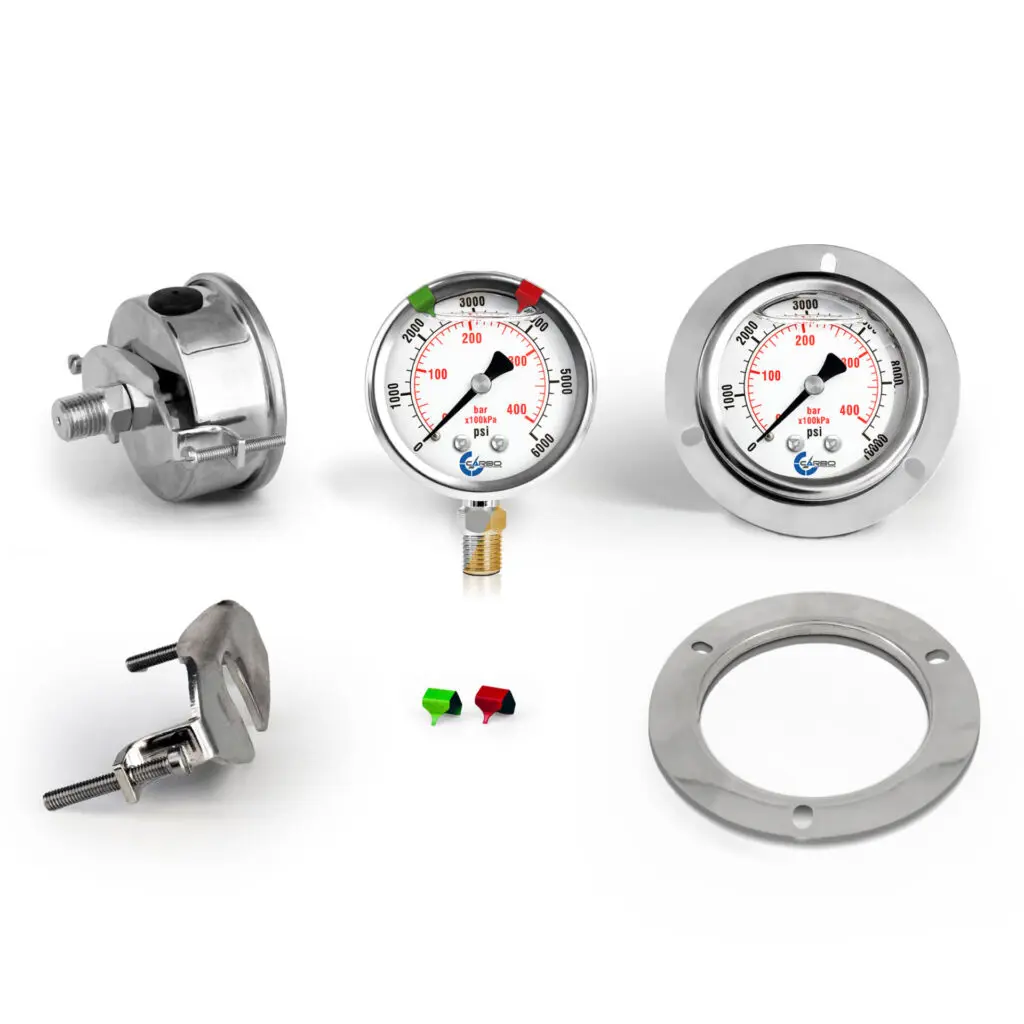
If you need added durability for demanding environments, explore our all stainless steel pressure gauges. For very small pressure changes, our low-pressure capsule gauges provide better resolution at low ranges. We also carry specialty pressure gauges and accessories to help with mounting, connections, and installation.
Not sure what to choose? Visit our Resources page for quick guides on PSI range selection, back vs bottom connections, NPT sizing, and SKU identification.
We also offer Pressure Gauge Calibration services. Serving customers nationwide with fast turnaround for oil, gas, and industrial manufacturing. We provide NIST-traceable pressure gauge calibration with detailed certificates, test data, and full traceability documentation
Start with your application. If your system has vibration or pulsation (compressors, pumps), choose a liquid filled pressure gauge for smoother readings. If your system pressure is stable and the environment is mild, a dry pressure gauge is usually enough.
When do I need a liquid filled pressure gauge?
Use a liquid filled gauge when the needle bounces, the equipment vibrates, or pressure fluctuates quickly. The liquid fill helps stabilize the pointer and protect the internal movement.
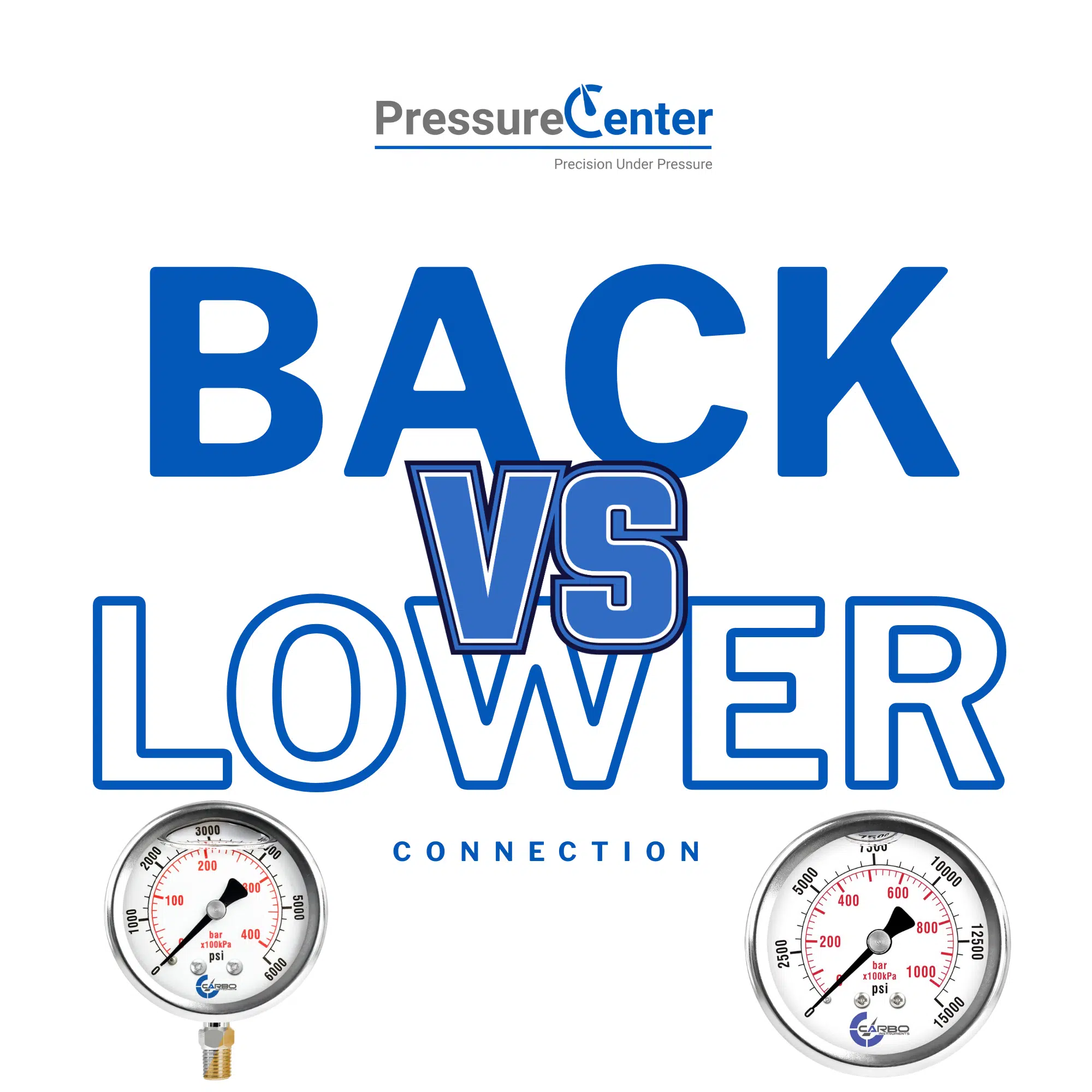
What’s the difference between back and bottom (lower) connection?
Bottom (lower) connection means the threaded port is at the bottom of the gauge and is common for piping and regulators. Back connection means the threaded port is on the rear of the gauge and is often used for panel mounting.
How do I choose the right PSI range?
The most common pressure gauge thread sizes are 1/4” NPT and 1/2” NPT. Match the thread size to your existing port or fitting. If you’re replacing a gauge, check the thread size on the old gauge or fitting.
Do you sell accessories for mounting and installation?
Yes. Our Accessories category includes items that help with installation and mounting, such as brackets, fittings, and related components depending on your setup.