
When to Use a Liquid Filled Pressure Gauge (And When Not To)
Knowing when to use a liquid filled pressure gauge is just as important as knowing how it works. While liquid filled gauges are designed to improve stability and durability, they are not always required for every application. Using the wrong type of gauge can increase cost without adding real value—or worse, lead to inaccurate readings.
This guide explains when a liquid filled pressure gauge is the right choice, when a dry gauge is sufficient, and how to decide based on your operating conditions.
What Does a Liquid Filled Pressure Gauge Do Best?
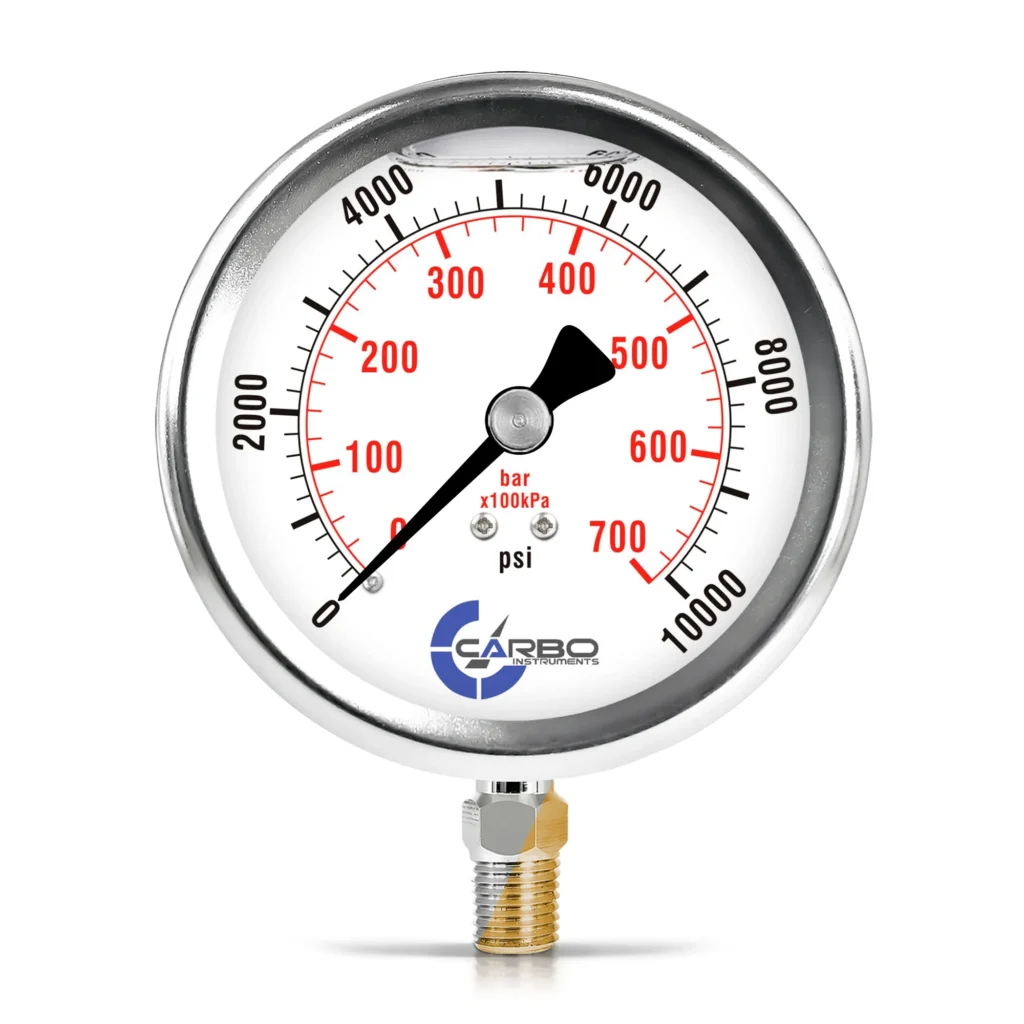
A liquid filled pressure gauge contains a damping liquid, usually glycerin or silicone oil, inside the case. This liquid reduces the effects of vibration and pressure pulsation on the internal mechanism.
Because of this design, liquid filled pressure gauges are best suited for environments where readings would otherwise be unstable or difficult to interpret.
When You Should Use a Liquid Filled Pressure Gauge
High Vibration Environments
One of the most common reasons to use a liquid filled pressure gauge is vibration. Equipment such as pumps, compressors, and motors can cause dry gauges to shake, leading to needle flutter and premature wear.
Liquid filling stabilizes the needle and protects internal components, making readings clearer and more reliable.
Systems with Pressure Pulsation
Pressure pulsation occurs when pressure rises and falls rapidly, such as in hydraulic systems or reciprocating pumps. In these situations, dry gauges often show erratic readings.
A liquid filled pressure gauge dampens these fluctuations, allowing the needle to move smoothly and display usable readings.
Outdoor or Mobile Installations
Outdoor installations are exposed to wind, temperature changes, and mechanical movement. Mobile equipment such as construction machinery or transport systems also experiences constant vibration.
Liquid filled pressure gauges perform better in these conditions by protecting the mechanism from shock and environmental stress.
Applications Where Reading Stability Matters
In systems where operators must visually monitor pressure, unstable readings can lead to misinterpretation or delayed response.
If consistent, easy-to-read pressure indication is critical, a liquid filled pressure gauge is often the better choice.
When a Liquid Filled Pressure Gauge Is NOT Necessary
Stable, Low-Vibration Systems
If your system operates under steady pressure with minimal vibration, a dry pressure gauge may perform just as well.
Examples include:
Static water systems
Low-vibration indoor equipment
Panel-mounted gauges in controlled environments
In these cases, liquid filling may not provide additional benefit.
Temperature-Sensitive Applications
Liquid filled pressure gauges can be affected by temperature changes. In hot environments, the liquid may expand, potentially causing case bulging if the gauge is not properly vented.
If the application involves high ambient temperatures and minimal vibration, a dry gauge may be a better option.
Cost-Sensitive Applications
Liquid filled pressure gauges typically cost more than dry gauges. If vibration and pulsation are not present, using a liquid filled gauge may increase costs without improving performance.
Choosing the simplest gauge that meets your requirements is often the best approach.
Liquid Filled vs Dry Pressure Gauges by Application
| Application Type | Recommended Gauge |
|---|---|
| High vibration equipment | Liquid filled pressure gauge |
| Hydraulic systems | Liquid filled pressure gauge |
| Air compressors | Liquid filled pressure gauge |
| Stable indoor systems | Dry pressure gauge |
| Panel instrumentation | Dry pressure gauge (often sufficient) |
This comparison helps clarify when liquid filling adds real value.
Common Industries That Use Liquid Filled Pressure Gauges
Liquid filled pressure gauges are commonly used in:
Hydraulic and pneumatic systems
Air compressors and pumps
HVAC and refrigeration equipment
Manufacturing and processing machinery
Outdoor and mobile equipment
These industries benefit most from vibration resistance and reading stability.
How to Decide Which Gauge to Use
When deciding whether to use a liquid filled pressure gauge, ask these questions:
Is there significant vibration or mechanical shock?
Does the system experience pressure pulsation?
Is the gauge installed outdoors or on mobile equipment?
Do operators rely on stable visual readings?
If the answer to one or more of these is yes, a liquid filled pressure gauge is usually the right choice.
Learn More About Liquid Filled Pressure Gauges
Conclusion
Understanding when to use a liquid filled pressure gauge helps prevent unnecessary costs, improve measurement reliability, and extend gauge life. Liquid filled gauges excel in environments with vibration, pressure pulsation, and mechanical stress, but they are not required for every application.
By matching the gauge type to your operating conditions, you can ensure accurate readings and dependable performance over time.
Liquid Filled Pressure Gauge Resources
Contact PressureCenter
PressureCenter is a trusted source for pressure measurement instruments worldwide. If you’re dealing with liquid filled pressure gauge problems like needle flutter, fogging, case bulging, leaks, or inaccurate readings, our team can help you choose the right gauge for your application and operating conditions. With the correct pressure range, connection type, and fill option, you can reduce failures, improve reading stability, and keep your operations running safely and efficiently.
View PressureCenter's online selection
of Liquid Filled Pressure Gauges
Frequently Asked Questions
Frequently Asked Questions About Liquid Filled Pressure Gauges
Liquid filled pressure gauges are not inherently more accurate than dry gauges, but they provide more stable readings in environments with vibration or pressure pulsation. The liquid dampens needle movement, making readings easier to interpret and reducing wear on internal components.
Why does my liquid filled pressure gauge fog up?
Fogging usually occurs due to temperature changes or moisture entering the gauge case. It is common in outdoor installations or environments with high humidity. Minor fogging does not always affect accuracy, but excessive condensation can obstruct visibility and may indicate sealing issues.
Can liquid filled pressure gauges be used outdoors?
Yes, liquid filled pressure gauges are commonly used outdoors because the liquid helps protect internal components from vibration and environmental stress. For outdoor use, it is important to choose gauges designed for temperature fluctuations and to ensure proper venting when required.
What liquid is inside a liquid filled pressure gauge?
Most liquid filled pressure gauges use glycerin as the filling liquid. Silicone oil is also used in applications with extreme temperatures or wide temperature swings. The liquid helps dampen vibration and stabilize the needle.
How often should liquid filled pressure gauges be calibrated?
Calibration frequency depends on the application and accuracy requirements. For critical systems, periodic calibration is recommended to ensure reliable readings. Gauges exposed to pressure spikes, vibration, or harsh conditions may require more frequent inspection or replacement.
- 1541 Prudential Drive
Dallas, TX 75235 - Tel: 972.803.4040