
Liquid Filled Pressure Gauge Problems and How to Fix Them
Liquid filled pressure gauges are designed to provide stable and accurate readings in demanding environments. However, like any mechanical instrument, they can develop issues over time if they are not selected, installed, or maintained properly.
In this guide, we cover the most common liquid filled pressure gauge problems, what causes them, and the practical steps you can take to fix them.
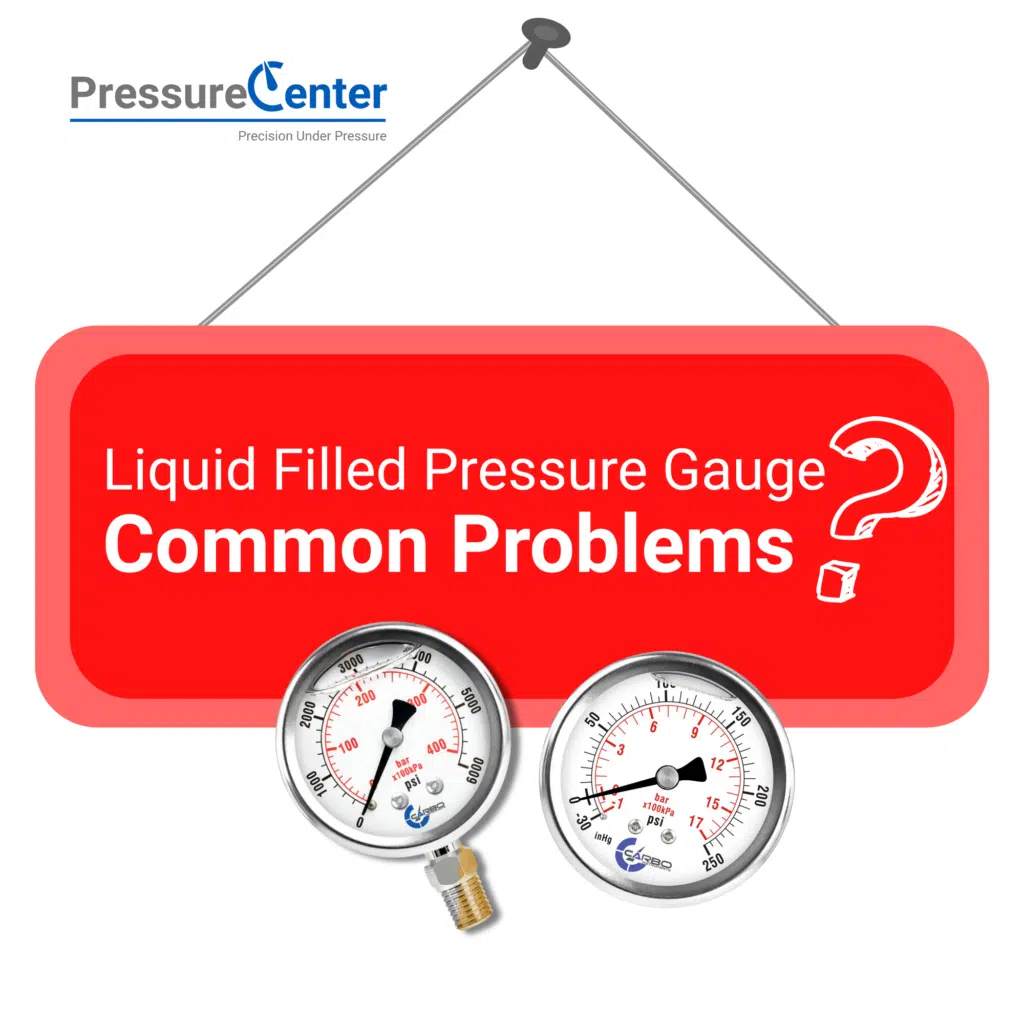
Why Liquid Filled Pressure Gauge Problems Occur
Liquid filled pressure gauge problems can occur over time, especially in systems exposed to vibration, temperature changes, and pressure fluctuations. While liquid filled pressure gauges are designed to protect internal components and provide stable readings, improper selection, installation, or operating conditions can still lead to performance issues.
Understanding common liquid filled pressure gauge problems helps prevent inaccurate readings, unexpected failures, and unnecessary replacements.
1. Needle Flutter or Unstable Readings
What causes it
Needle flutter occurs when the gauge is exposed to rapid pressure pulsation or excessive vibration beyond its design limits.
Common causes include:
-
Severe pressure fluctuations
-
Incorrect pressure range selection
-
Excessive mechanical vibration
How to fix it
-
Select a gauge with a pressure range that places normal operating pressure between 25% and 75% of full scale
-
Verify that a liquid filled gauge is appropriate for the vibration level
-
Consider additional dampening or system isolation if pulsation is extreme
2. Fogging or Condensation Inside the Gauge
What causes it
Fogging occurs when moisture enters the gauge case or when temperature changes cause condensation to form inside the lens.
This is commonly seen in:
-
Outdoor installations
-
Environments with rapid temperature changes
-
Improperly sealed gauges
How to fix it
-
Use gauges designed for outdoor or high-humidity environments
-
Ensure proper sealing and installation
-
Allow pressure equalization using vented gauges when required
Minor fogging does not always affect accuracy, but severe condensation can obstruct readings.
3. Bulging or Deformed Gauge Case
What causes it
Liquid filled pressure gauges may experience case bulging due to thermal expansion of the filling liquid when exposed to high temperatures.
This typically happens when:
-
Gauges are installed in direct sunlight
-
Ambient temperatures exceed recommended limits
-
Non-vented gauges are used in hot environments
How to fix it
-
Use gauges with a pressure-relief or vented plug
-
Avoid installation in areas exposed to extreme heat
-
Select silicone-filled gauges for wider temperature ranges
4. Slow or Sticking Needle Movement
What causes it
A needle that moves slowly or sticks may indicate internal contamination or wear.
Possible causes include:
-
Debris entering the gauge
-
Media incompatibility
-
Long-term mechanical wear
How to fix it
-
Verify that the gauge materials are compatible with the process media
-
Replace the gauge if internal contamination is suspected
-
Ensure proper filtration upstream if needed
Sticking needles can lead to misleading readings and should not be ignored.
5. Inaccurate Pressure Readings
What causes it
Inaccuracy can develop over time due to mechanical wear, pressure spikes, or incorrect gauge selection.
Common contributors include:
-
Overpressure events
-
Operating outside the recommended pressure range
-
Lack of calibration
How to fix it
-
Replace gauges exposed to repeated overpressure
-
Select a pressure range appropriate for normal operating conditions
-
Implement periodic calibration for critical applications
6. Leakage Around the Connection
What causes it
Leaks usually occur due to improper installation, damaged threads, or incorrect connection type.
How to fix it
-
Confirm thread size and type before installation
-
Use proper sealing methods
-
Avoid over-tightening, which can damage threads
Leaks not only affect accuracy but can also pose safety risks.
How to Prevent Common Liquid Filled Pressure Gauge Problems
Preventive steps can significantly extend gauge life:
-
Choose the correct pressure range and filling liquid
-
Match gauge materials to the process media
-
Avoid excessive vibration and temperature exposure
-
Inspect gauges regularly for signs of damage or wear
Proper selection and installation are the most effective ways to avoid performance issues.
When to Replace a Liquid Filled Pressure Gauge
Liquid filled pressure gauges should be replaced if:
-
The lens is severely fogged or damaged
-
The needle sticks or does not return to zero
-
Readings are consistently inaccurate
-
The case is deformed or leaking
Replacing a faulty gauge improves safety and measurement reliability.
Learn More About Liquid Filled Pressure Gauges
For a complete overview of how liquid filled pressure gauges work, their benefits, and how to choose the right configuration, visit our Liquid Filled Pressure Gauge Resources.
Liquid Filled Pressure Gauge Resources
Contact PressureCenter
PressureCenter is a trusted source for pressure measurement instruments worldwide. If you’re dealing with liquid filled pressure gauge problems like needle flutter, fogging, case bulging, leaks, or inaccurate readings, our team can help you choose the right gauge for your application and operating conditions. With the correct pressure range, connection type, and fill option, you can reduce failures, improve reading stability, and keep your operations running safely and efficiently.
View PressureCenter's online selection
of Liquid Filled Pressure Gauges
Frequently Asked Questions
Frequently Asked Questions About Liquid Filled Pressure Gauges
Liquid filled pressure gauges are not inherently more accurate than dry gauges, but they provide more stable readings in environments with vibration or pressure pulsation. The liquid dampens needle movement, making readings easier to interpret and reducing wear on internal components.
Why does my liquid filled pressure gauge fog up?
Fogging usually occurs due to temperature changes or moisture entering the gauge case. It is common in outdoor installations or environments with high humidity. Minor fogging does not always affect accuracy, but excessive condensation can obstruct visibility and may indicate sealing issues.
Can liquid filled pressure gauges be used outdoors?
Yes, liquid filled pressure gauges are commonly used outdoors because the liquid helps protect internal components from vibration and environmental stress. For outdoor use, it is important to choose gauges designed for temperature fluctuations and to ensure proper venting when required.
What liquid is inside a liquid filled pressure gauge?
Most liquid filled pressure gauges use glycerin as the filling liquid. Silicone oil is also used in applications with extreme temperatures or wide temperature swings. The liquid helps dampen vibration and stabilize the needle.
How often should liquid filled pressure gauges be calibrated?
Calibration frequency depends on the application and accuracy requirements. For critical systems, periodic calibration is recommended to ensure reliable readings. Gauges exposed to pressure spikes, vibration, or harsh conditions may require more frequent inspection or replacement.
- 1541 Prudential Drive
Dallas, TX 75235 - Tel: 972.803.4040