
Liquid Filled Pressure Gauge vs Snubber: Do You Need Both?
Pressure gauges exposed to vibration and pressure pulsation often suffer from unstable readings and shortened service life. Two common solutions are using a liquid filled pressure gauge or installing a pressure snubber. While both reduce needle movement, they serve different purposes.
Understanding the difference between a liquid filled pressure gauge vs snubber helps you choose the right solution for your system—and avoid unnecessary components.
What Is a Liquid Filled Pressure Gauge?
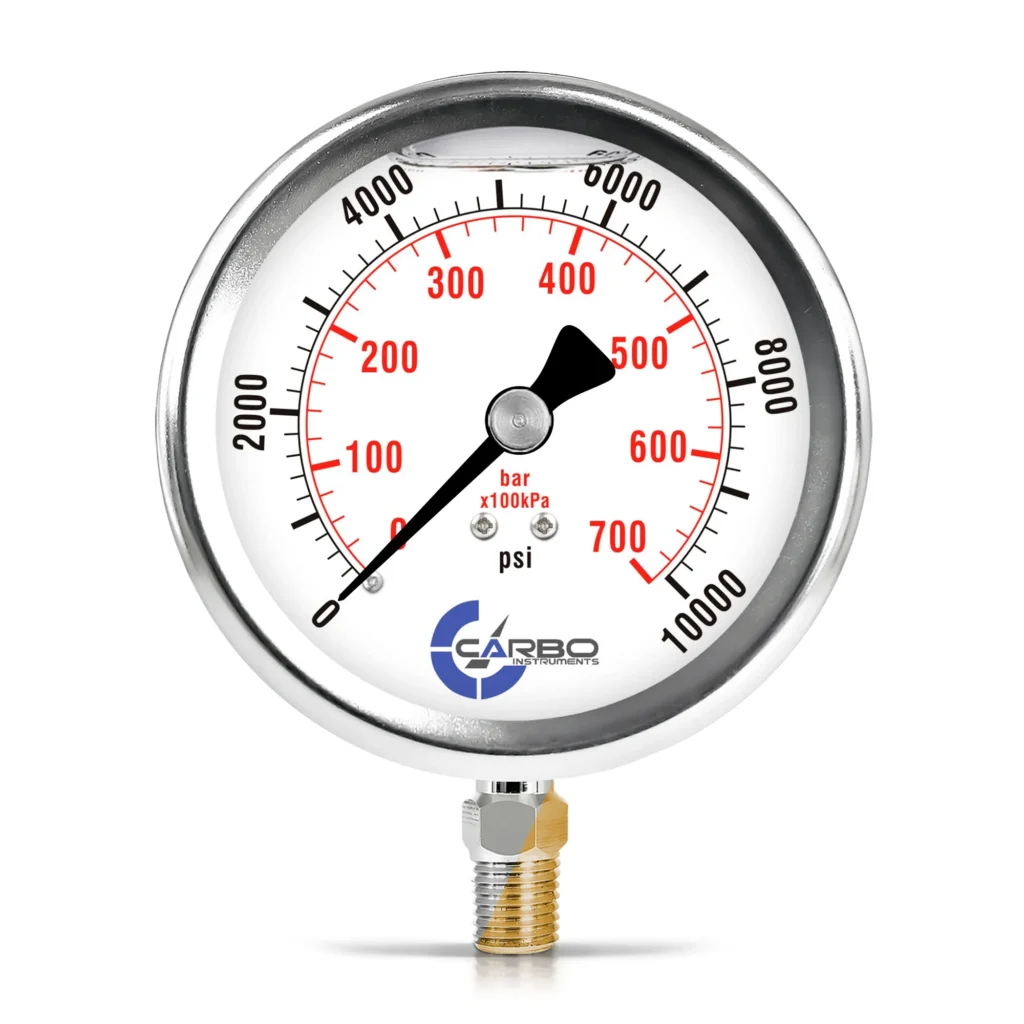
A liquid filled pressure gauge contains a damping liquid, typically glycerin or silicone oil, inside the case. This liquid stabilizes the needle, reduces vibration, and protects internal components from mechanical stress.
Liquid filled gauges are commonly used in applications where vibration or moderate pressure pulsation is present.
What Is a Pressure Snubber?
A pressure snubber is a mechanical device installed between the process and the pressure gauge. It restricts the flow of pressure spikes before they reach the gauge.
Snubbers are specifically designed to protect gauges from severe pressure pulsation and sudden pressure surges.
Liquid Filled Pressure Gauge vs Snubber: Key Differences
| Feature | Liquid Filled Pressure Gauge | Pressure Snubber |
|---|---|---|
| Primary function | Dampens vibration | Restricts pressure spikes |
| Installation | Built into the gauge | Installed upstream |
| Best for | Vibration, mild pulsation | Severe pulsation |
| Cost impact | Moderate | Low |
| Maintenance | Replace gauge | Clean or replace snubber |
Both solutions improve gauge stability, but they are not interchangeable.
When a Liquid Filled Pressure Gauge Is Enough
A liquid filled pressure gauge is usually sufficient when:
Vibration is present but not extreme
Pressure fluctuations are moderate
Equipment operates continuously
Reading stability is the primary concern
Examples include pumps, compressors, and HVAC systems.
When You Need a Pressure Snubber
A pressure snubber is recommended when:
Pressure spikes are sharp and frequent
Pulsation damages gauges quickly
The system uses reciprocating pumps
Gauge failure occurs repeatedly
In these cases, liquid filling alone may not provide adequate protection.
Do You Ever Need Both?
Yes. In severe applications, combining a liquid filled pressure gauge with a snubber offers maximum protection.
Using both is common in:
Hydraulic systems
Chemical processing
High-pressure industrial equipment
The snubber reduces incoming pressure spikes, while the liquid fill stabilizes the gauge movement.
Common Mistakes to Avoid
Assuming liquid filling replaces a snubber
Using a snubber without cleaning it periodically
Installing a snubber that is too restrictive
Selecting a gauge pressure range that is too low
Correct selection prevents inaccurate readings and premature failure.
How to Choose the Right Solution
Ask these questions:
Is vibration the main issue, or pressure pulsation?
Are gauge failures frequent?
Is reading stability or component protection the priority?
Your answers determine whether you need a liquid filled gauge, a snubber, or both.
Learn More About Liquid Filled Pressure Gauges
For a complete guide on liquid filled pressure gauges, including applications, common problems, and selection tips, visit our Liquid Filled Pressure Gauge Resources.
Conclusion
Understanding the difference between a liquid filled pressure gauge vs snubber helps prevent gauge damage and ensures accurate pressure readings. Liquid filled gauges reduce vibration-related issues, while snubbers protect against pressure spikes.
Selecting the right solution—or combining both—improves reliability and extends gauge life.
Liquid Filled Pressure Gauge Resources
Contact PressureCenter
PressureCenter is a trusted source for pressure measurement instruments worldwide. If you’re deciding between a liquid filled pressure gauge vs snubber to address vibration or pressure pulsation, our team can help you select the right solution for your application. By choosing the correct gauge type, pressure range, connection, and protection method, you can improve reading stability, reduce premature gauge failures, and keep your operations running safely and efficiently.
View PressureCenter's online selection
of Liquid Filled Pressure Gauges
Frequently Asked Questions About Liquid Filled Pressure Gauges vs Snubbers
What is the difference between a liquid filled pressure gauge and a snubber?
A liquid filled pressure gauge reduces needle movement by damping vibration inside the gauge case using a filling liquid such as glycerin or silicone. A pressure snubber is a separate device installed upstream that restricts sudden pressure spikes before they reach the gauge. Both improve stability, but they address different problems.
Do I need a snubber for liquid filled pressure gauge
In many applications, a liquid filled pressure gauge alone is sufficient. However, if the system experiences severe or rapid pressure pulsation, a snubber may still be required. Liquid filling dampens vibration, while a snubber protects against sharp pressure spikes.
Which is better for pressure pulsation: a liquid filled gauge or a snubber?
A snubber is more effective for controlling strong pressure pulsation because it limits the pressure reaching the gauge. A liquid filled pressure gauge helps stabilize readings but may not fully protect against extreme pulsation on its own.
Can a liquid filled pressure gauge and snubber be used together?
Yes. In high-stress applications, using both a liquid filled pressure gauge and a snubber provides maximum protection. The snubber reduces incoming pressure spikes, while the liquid fill minimizes vibration and needle movement.
When should I choose a snubber instead of a liquid filled pressure gauge?
A snubber should be considered when gauges fail frequently due to pressure spikes, when pulsation is severe, or when the system uses reciprocating pumps or hydraulic equipment. In stable systems with moderate vibration, a liquid filled pressure gauge is often sufficient.
- 1541 Prudential Drive
Dallas, TX 75235 - Tel: 972.803.4040